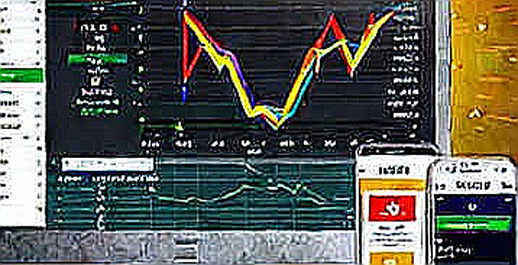
The data indicates a statistical anomaly. CME FedWatch assigns a 38% probability to a rate hike at the upcoming FOMC meeting. This number is a bug in the market's pricing engine. The underlying macroeconomic signals—neutral rate estimates, core PCE persistence, and AI-driven credit demand—converge on a different conclusion: the probability should be higher. Markets are conditioned to expect dovish pivots. They forget that data dependencies are not optional. Warsh's reduction of forward guidance does not erase the math; it simply hides it from those who do not look.
The context is a Federal Reserve chair—Kevin Warsh—who took office in May 2025, inheriting an economy with a stubborn inflation tail and a fractured committee. Lorie Logan, an FOMC voting member, has publicly supported 'moderately higher rates.' Economist Joseph Lavorgna argues the labor market is stable and policy is not restrictive outside housing. These are not fringe voices. They are data points from credible sources. Yet the market prices a 62% chance of no change. The gap between the plausible economic path and the market's pricing is a latent volatility source—one that crypto, with its leverage and low liquidity, is uniquely exposed to.
Bitcoin and Ether have traded in a 5% range for weeks. Altcoins show even lower volatility. The market is pricing in a benign outcome. That is a miscalculation. In the absence of data, opinion is just noise. The data here suggests the Fed has room to move, and at least some members want to use it.
Core Insight: The Neutral Rate Shift
The most critical data point often buried in macro commentary is the rise in r-star—the neutral real interest rate. Lavorgna attributes part of this to AI-driven capital expenditures boosting credit demand. If r-star has indeed risen by, say, 50 basis points, the current effective federal funds rate of 4.5% becomes relatively less restrictive. The math is straightforward: lower the rate relative to neutral, and the economy runs hotter, inflation pressures re-ignite. The Fed's own models may be underestimating this shift. In my experience auditing DeFi lending protocols, a 50-basis-point error in risk-free rate assumptions cascades through every discounted cash flow, every liquidation threshold. The same logic applies to the broader economy.
Core PCE has run consistently above the 2% target for several years—more than a full percentage point over in some months. The article lacks specific month-over-month trend data, but the fact that it is cited as a justification for hikes without qualification suggests the persistence is real. Inflation is not a one-off shock. It is a structural feature of an economy with aging demographics, deglobalization, and a tech-driven investment boom. The Fed's tools are blunt, but they are not optional.
Employment: The Vague 'Stable' Signal
The article describes the labor market as 'stable.' That is not data. That is a placeholder. In my forensic work on tokenomics audits, 'stable' without a number is a red flag. A true forensic examination requires the unemployment rate, labor force participation rate, and wage growth trajectory. Without those, the 'stable' claim is untestable. However, the very absence of a counterargument—no mention of a recession risk or wage spiral—implies that the tightening narrative has traction. If the labor market were truly weak, the article would detail it. It does not. The default assumption for a skeptical reader should be: labor market resilience is the baseline, which supports the case for a hike.
The Housing Exception: A Minor Signal
Lavorgna notes that housing is the one sector where policy feels restrictive, but it constitutes only 3% of the economy. That is a crucial numerical scale. A 3% drag does not warrant a full-scale policy loosening. It is a misallocation of attention. The market narrative often overweights housing because it is politically salient. The data says ignore it for rate decisions.
Market Impact: The Probability Gap
The 38% probability of a hike is a mispricing. If the Fed actually delivers a hike, the immediate impact on risk assets will be severe. Crypto markets are particularly vulnerable because they trade on narrative liquidity. A surprise hawkish move would trigger a repricing of discount rates across the board. Bitcoin could drop 10-15% in hours; altcoins with weak fundamentals could see 30% declines. The bond market would steepen the yield curve as long-term yields catch up to the higher r-star. The dollar would strengthen against euro and yen.
But even if the Fed holds, the damage is done. The hawkish statements from Logan and Lavorgna have already shifted the Overton window. The next meeting will see a higher probability priced in. Markets will become hypersensitive to every CPI release, every jobless claim. Volatility will increase, not decrease.
Contrarian: What the Bulls Get Right
The bulls argue that AI capital expenditure is a long-term productivity enhancer, which could be deflationary over a five-year horizon. They also point to the weakness in housing and commercial real estate as a drag on growth that could self-regulate inflation. These are valid variables. However, the timing is misaligned. The Fed's decision horizon is over the next 12 months, not the next five years. AI's deflationary benefits will not arrive before the next inflation print. The housing drag is real but insufficient to offset the demand from elevated fiscal spending and AI investment. The bulls are extrapolating a future that has not yet arrived, while ignoring the present data points that justify caution.

Takeaway: The Binary Choice
The Fed faces a binary choice. Raise rates now to anchor expectations, or hold and risk the same debate in six months with higher inflation and lower credibility. The market's 38% probability is a bug that will be corrected—either by an actual hike or by a violent repricing of expectations. For crypto investors, the path forward is clear: reduce leveraged positions, increase short-duration exposures, and prepare for volatility. Code has no mercy, but neither does the data. The numbers do not care about your portfolio's hopes. They only care about what is true.
Based on my risk audit experience in 2017 ICO markets, I learned that ignoring micro red flags leads to catastrophic loss. The same applies to macro. A 38% probability of a rate hike, with data supporting a much higher chance, is a red flag. Heed it.