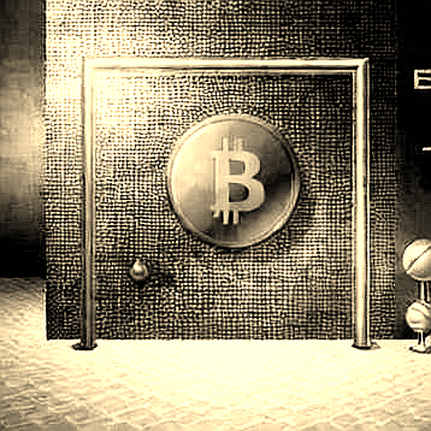
The narrative is seductive. U.S. Bank’s wealth management division quietly caps crypto allocation at 4% for its clients. Morgan Stanley files for a Solana trust. Goldman Sachs upgrades Coinbase to a Buy. Japan’s finance minister signals deeper integration—tax cuts, exchange reform. On the surface, 2026 is the year traditional finance finally anchors its flag in the volatile soil of digital assets. Bitcoin sits at $98,930, up 1.4%. Ethereum rises 2%. Solana inches toward $160, with a market cap of $62.5 billion. XRP jumps 12% to a $135 billion valuation. SUI climbs 14%. RENDER surges 18%. The market breathes optimism.
But beneath this surface lies a structural dissonance that most analysts are glossing over. While the macro narrative screams “institutional legitimacy,” two security events—Kraken’s data breach investigation and Ledger’s third-party leak affecting 100,000+ users—reveal a critical blind spot. The same infrastructure that attracts new capital is still bleeding at the seams. This is not a bearish call. It is a call to decode the signal from the narrative noise.
Context: The Institutional Pivot Point The current wave of institutional participation is distinct from the 2021 bull run. Back then, MicroStrategy and Tesla made headlines with balance sheet allocations. Today, the moves are more systemic: wealth management access (U.S. Bank), trust structures (Morgan Stanley), and investment bank endorsements (Goldman). Japan’s official stance adds a regulatory catalyst. The result is a market that feels “safer” to new capital. But safety is a function of infrastructure, not just regulation.
Core: The Capital Flow Paradox Unearthing the logic within the speculative fog requires mapping how capital actually moves. U.S. Bank’s 4% cap is not a vote of confidence—it is a risk management exercise. The cap limits downside while allowing upside exposure. Morgan Stanley’s Solana trust is a structural play: if approved, it would offer institutional-grade exposure to SOL without direct custody, but the approval timeline is 3–6 months. Meanwhile, Goldman’s upgrade of Coinbase reflects a bet on trading volumes, not on the underlying tokens.
The real signal lies in the intra-market divergence. Bitcoin and Ethereum saw modest gains (1–2%), while XRP, SUI, and RENDER posted double-digit jumps. This is not random. XRP benefits from a regulatory narrative (Ripple’s legal clarity). SUI represents high-performance L1 interest. RENDER taps into decentralized physical infrastructure (DePIN). Capital is rotating into specific stories, not a blanket buy-the-market.

But here is the noise. Kraken is investigating a potential customer data breach. Ledger confirmed that a partner service exposed email, phone, and shipping data. These are not protocol-level failures—they are operational security holes. Yet for institutional clients who just dipped toes into crypto, trust is binary. If a security incident whispers, even a small one, it can freeze new allocations. The pivot point where genre defines value is now: institutional capital flows are real, but they run on a fragile layer of third-party integrations.

Contrarian: The Web2 Achilles’ Heel The contrarian lens is uncomfortable but necessary. Every wave of institutional adoption has been preceded by a wave of security failures that were later forgotten. In 2021, it was exchange hacks (Poly Network, Cream Finance). In 2026, the vector shifts to supply chain and data privacy. The Kraken and Ledger events are symptoms of a structural bear market in security hygiene. Most projects prioritize speed-to-market over operational resilience. As regulation improves, the gap between “compliant” and “secure” widens. Building frameworks for the next narrative cycle means anticipating that the next crash may not come from leverage, but from a cascading trust failure triggered by a single vendor exploit.
Takeaway: Where the Next Narrative Cycle Lies Institutional capital is here to stay. But the next 6–12 months will test whether the infrastructure can scale without breaking. The projects that survive will not be the ones with the biggest fundraising rounds. They will be the ones that can prove operational security as a competitive advantage. The market is ready for a new genre: security-as-a-service for the institutional onramp. The question is not whether institutions want in—they do. It is whether the ecosystem can keep their capital from leaking through the cracks. Are we ready for the next wave, or are we just repeating the same mistakes with a new label?